

A featured contribution from Leadership Perspectives: a curated forum reserved for leaders nominated by our subscribers and vetted by the Construction Tech Review Advisory Board.

Gamuda Land
Addressing the Elephant in the Room - Towards Long Term Sustainability of Smart Cities

Richard Raj Sebastian
The term “smart city” needs no introduction today. It was not too long ago before the terms digital transformation and IoT became buzzwords; circa mid 2000s when ICT technologies such as high-speed Internet connectivity together with sensor technologies such as radio frequency identification were beginning to be promoted as the killer solution to address various urbanisation issues and soon came the concept of “smart cities”.
As the world’s population continues to grow in urban areas exponentially, the utopian idea—leveraging technology together with better urban planning to make the city more livable, accessible, and sustainable—is now a major discussion point globally. UN statistics suggest that around 55 percent already live in urban areas in 2018, and it is projected to be 68 percent by 2050. In Malaysia, over 75 percent already live in urban areas, which are expected to rise to over 90 percent within the same timeline.
Fast forward to today, the launch of UN Sustainable Development Goals (SDG) in 2015 specifically focusing on sustainable cities and communities, smart cities have become the lingua franca for nearly every other country and major cities across the Asia Pacific. Not only from more developed nations such Australia, Japan, Korea, Taiwan or Singapore; to even multiple initiatives being announced in China, India, Indonesia, or Malaysia and even to countries just beginning to embrace the digital revolution such as Nepal, Fiji, and Cambodia. Each initiative may have unique objectives, but the common themes are centered on fostering societal improvement and forging economic growth.
-(1).jpg)
What’s Being Done
The good news is smart cities is now being actively discussed at all levels; from national to municipal levels to even being actively promoted by large real-estate developers. Besides awareness, stakeholders across the region are piloting and pushing ahead various projects to address challenges faced in governance, mobility, safety, energy, and healthcare, amongst others with the goal to enhance the overall quality of life of its population further.
The majority are also beginning to acknowledge several other factors which have impeded many early smart city initiatives; this includes smart cities being about addressing real-life business and use cases rather than a technology showcase, in addition to the need for open-loop rather than closed-loop systems to address scalability issues, and the ability to cater to all groups of stakeholders needs rather than selective users. There is even beginning to see talks of ensuring the design of green-field developments to factor in all sustainability aspects such as materials used and design process from the onset to ensure it enables a smart and sustainable development.
What many parties do not talk about enough is the introduction of smart cities also requires re-visiting the way smart cities are funded
Besides, with the rise of cyber threats, there is growing calls to ensure a holistic cybersecurity approach is adopted to ensure better resiliency.
Avoiding Another White Elephant
What many parties do not talk about enough is the introduction of smart cities also requires re-visiting the way smart cities are funded. People often overlook that an integrated smart city program requires sizeable funding, and it can be in the millions to billions of dollars depending on the scale of the overall program.
The traditional means to fund city-level projects were traditionally on the onus of the government via government financing, and the reality is governments globally face limited resources to fund a wide range of policies related to social, health, and infrastructure. Another funding mechanism is institutional funding via the means of public-private partnerships (PPP) or international grants, for instance. Both government financing and institutional funding such as PPP end up being funded generally through taxes while international grants is dependent on the availability of such grants and generally has a limit. Private smart city initiatives typically can be found among larger-scale real estate developers. The costs of such initiatives are generally factored into the overall cost of the property, hence making the real estate more expensive.
Whether it is a public or private-led smart city initiative, the current funding mechanism makes it hard to be sustainable over the long term as the cost is either absorbed by the government or taxed or passed on to the residents. The primary reason many regional smart city initiatives including several countries in Asia which launched its ‘50 or 100 smart city programs’ have not taken off the ground as smoothly as it had planned is lack of funds. Similarly, passing the cost to prospective buyers makes it less affordable to own property; which is already a common challenge seen in the real estate market for all major cities in the region.
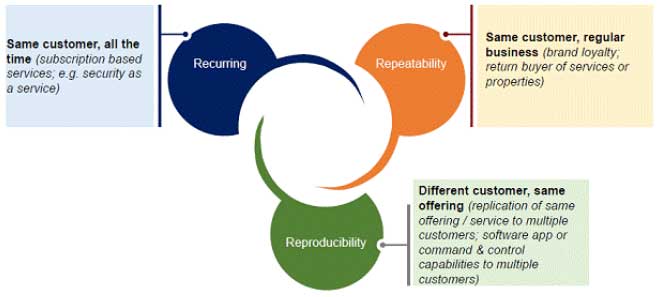
Due to funding restrictions, smart city initiatives could quickly stall and be sidelined all together if no proper long-term viable solution is found.
Looking at a Different Approach
Acknowledging that addressing the long-term sustainability of funding a smart city is the first step. Gamuda Land, for instance, is re-evaluating the business model to make it self-funded where possible to ensure its smart city ambition is not sidelined.
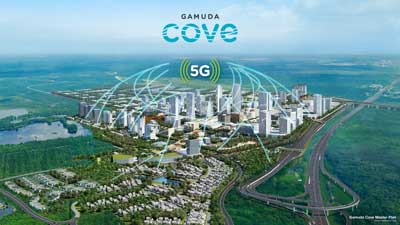
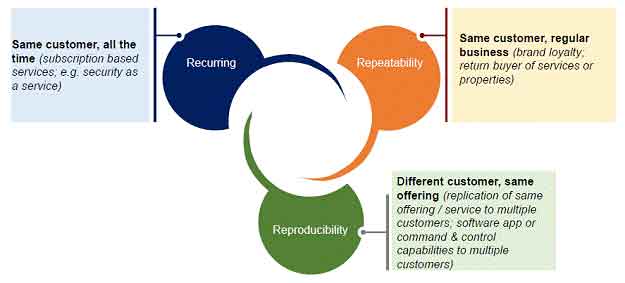
As a leading real estate developer in the region, Gamuda Land’s is looking at instituting on a city-as-a-service model when deploying its smart city plans for its projects. It is also exploring the ‘urbanization’ of various services required by its residents to manage the cost of running these solutions better. The medium to long-term strategy will focus on the 3R’s which are Recurring, Repeatability and Reproducibility as outlined in the diagram above. It will serve as the guiding principles for Gamuda Land, which ultimately looks at monetization of services that will make its overall smart township and city a sustainable vision.
A similar approach can be made even in governmental level smart city projects to make it more viable for the long term. Aided with a digital suite of offerings and where the Smartphone has become ubiquitous, stakeholders need to be more creative when looking at funding options and consider embracing a services-based model; whether pay-per-use or long-term subscription-based on individual needs will ensure continuous applicability of the smart city solutions.
The articles from these contributors are based on their personal expertise and viewpoints, and do not necessarily reflect the opinions of their employers or affiliated organizations.
