

A featured contribution from Leadership Perspectives: a curated forum reserved for leaders nominated by our subscribers and vetted by the Construction Tech Review Advisory Board.

Surbana Jurong Private Limited
Waterworld - A Case for the Smart Sponge City
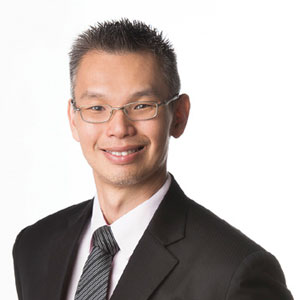
Joe Keen Poon
Proper planning and technology is not just good business, but good for mankind
In 1995, Hollywood launched the movie Waterworld starring Kevin Costner. While the reception from the critics and at the box office was mixed, it made history the biggest budget movie ever made at that time.
When we fast forward 23 years to today and strip out the plot’s most exaggerated bits, 3 things from that movie stood out as eerily prophetic—floods and rising sea levels are menacing, while drinkable water is getting scarce, and yes—managing water is big business.
Water, Water Everywhere, Not a Drop to Drink
Mankind will have to tackle these challenges for a long time to come. By 2025, 1.8 billion people is expected to be living in countries or regions with absolute water scarcity (United Nation, 2014); by 2030, the number of people affected by river floods each year could increase from approximately 21 million people worldwide to 54 million, due to climate change and widespread urban development. (World Resources Institute, 2015).
Correspondingly, the demand of solutions is expected to drive the global water market is growing strongly and expected to be close to US $ 700bn by 2018 (Global Water Intelligence)
Singapore is no stranger to these water concerns. With no natural water resources to call our own, we have been highly dependent on the import of raw water and natural storm water to fill our reservoirs. On the other hand, there were also flooding in the 60s and 70s that was common during heavy rains. Climatic changes in the recent years also brought along the occasional flash floods.
Catch Every Drop, Reuse Every Drop and Use Every Drop More Than Once
Over the last 50 years, Singapore’s water story has evolved significantly. Under the leadership of its national water agency, Public Utilities Board (PUB), Singapore’s society and industry has been largely successful in strengthening our water resilience. The post war development saw Singapore expanded its water imports from Malaysia and also from building of its local reservoirs. As technology improves, Singapore was able to drive an integrated water resources management approach and manage our water resources through our “Four National Taps” strategy: collecting storm water through a comprehensive network of water channels; purifying wastewater at our NEWater plants; importing water from our neighbour; using desalination plants to meet some of our water demands. To develop flood resilience in coping with increasing weather uncertainties and urbanisation, Singapore adopts a multi-pronged approach, leveraging innovative engineering solutions and best practices: slowing down the water runoff during intense rains; expanding water channels to improve drainage infrastructure and increase flood protection; introducing policies such as the “Code of Practice (COP) on Surface Water Drainage” for new developments. Technology plays a key role along every step of the way. The picture of success is to “Catch every drop, reuse every drop and use every drop more than once”.
Placed in a unique position of having to address both flooding and lack of water, Singapore’s experience in effectively addressing our water challenges has earned us international recognition as a model city for water management and an emerging global hydrohub.
We believe that the combination of proper urban planning and technology will help us stay on the right path
In the recently released “Sustainable Cities Water Index 2016” by Arcadis, Singapore was ranked 1st in Asia. It was noted in the report that “Singapore has made vast improvement over the past several decades to become a regional water hub……despite its geographic vulnerability regarding flood risk and water reserves”. Our NEWater Program has also received the “Water for Life" Best Practices Award at UN World Water Day in March 2014 in Tokyo, Japan
Not Just Singapore, Look to China, India and the Middle East
From 1970 – 2012, the world recorded nearly 8,835 water and weather related disasters. Storms and floods accounted for 79 percent of this number (World Metrological Organization 2014). With the rapid pace of urbanisation and fast growing population (especially in countries such as China and India), low lying coastal cities are more exposed to the losses associated with flooding. Potential areas could include coastal China, India (Kolkata, Mumbai and Surat), as well as others including Egypt (Alexandria), Thailand (Bangkok), Bangladesh (Dhaka), Ecuador (Guayaquil), Vietnam (Hai Phong and Ho Chi Minh City), Indonesia (Jakarta), and United States of America (Miami). On the other extreme, highly water stressed countries (facing droughts) could potentially include those from the dry Middle East countries such as Bahrain, Israel, Kuwait, Oman, Lebanon, Palestine, Qatar, Saudi Arabia and United Arab Emirates, interior of China, as well as the African continent’s Eritrea, Ethiopia, Morocco, Somalia, Sudan and Uganda. Droughts caused 35 percent of deaths from the almost 9000 disasters stated above (World Metrological Organization 2014). These countries can stand to benefit from the experiences of the likes of Singapore.
Smart supply, Smart demand, Smart Sponge
Along the way, Surbana Jurong has always been a supportive partner to PUB. As Asia’s consultancy powerhouse for urbanisation, industrial and infrastructure developments, we have a distinguished track record in shaping Singapore’s landscape over the last 50 years. We believe that the Smart Sponge City concept of leveraging on technology to aid in the capturing and managing water will be important for the viability of many of the cities facing water stress or flooding. Pilot sponge city projects in Beijing, Shanghai and Xinjiang have shown promising results in managing runoff water (China Water Risk May 2016). Advances in Smart City technologies enable us to design end to end solutions that spans across the spectrum of water management holistically, where the designing, planning and managing of water demand and supply are fully integrated with relevant technological advances.
Catch every drop, reuse every drop, use every drop... and now analyze every drop
To have a viable Smart Sponge City solution, we need an “In a box” or coherent, ready to deploy solution that harness the power of technology. Together with other Singapore partners like Zweec, Hyflux and Netatech, we are well equipped to go beyond urban planning and, water and environmental engineering, to the harnessing of modelling, monitoring and analytics technologies. This is where the Smart Sponge City differs from conventional water approach. By using technology to weave together demand and supply, cities can “Catch every drop, reuse every drop, use every drop…and now analyze every drop”.
As IE Singapore Group Director, Kow Juan Tiang stated, “Singapore’s journey towards water self-sustainability has spurred our companies to constantly innovate and develop effective water solutions…… We believe that Singapore companies are well placed to work with other cities on water issues...”>/p>
At the basic infrastructure layer, a sensor-based smart water operation can provide extensive visibility and situational awareness, resulting in improved decision-making, enhancing efficiency and reducing risk. A water efficiency analytic component helps to mitigate non-revenue water through pressure optimisation and pipe failure prediction. As more data becomes available, insights can be delivered from big data to help operators improve irrigation, flood management and sewer overflows. Lastly, it is important to enhance user engagement and allow information to be made accessible. This can be achieved via visualisation techniques of the water consumption data.
Humanity is moving into uncharted waters with the speed and scale of urbanization. We are reaching a fork road where one path leads to the apocalyptic vision set out in Waterworld, and the other the survival of the world as we know it. We believe that the combination of proper urban planning and technology will help us stay on the right path.
